
Do You Need a Voltage Stabilizer? Cost, Risks & Guide
Why your home needs a voltage stabilizer. Learn costs, risks of not using one, price ranges, and how to choose the right stabilizer in India.
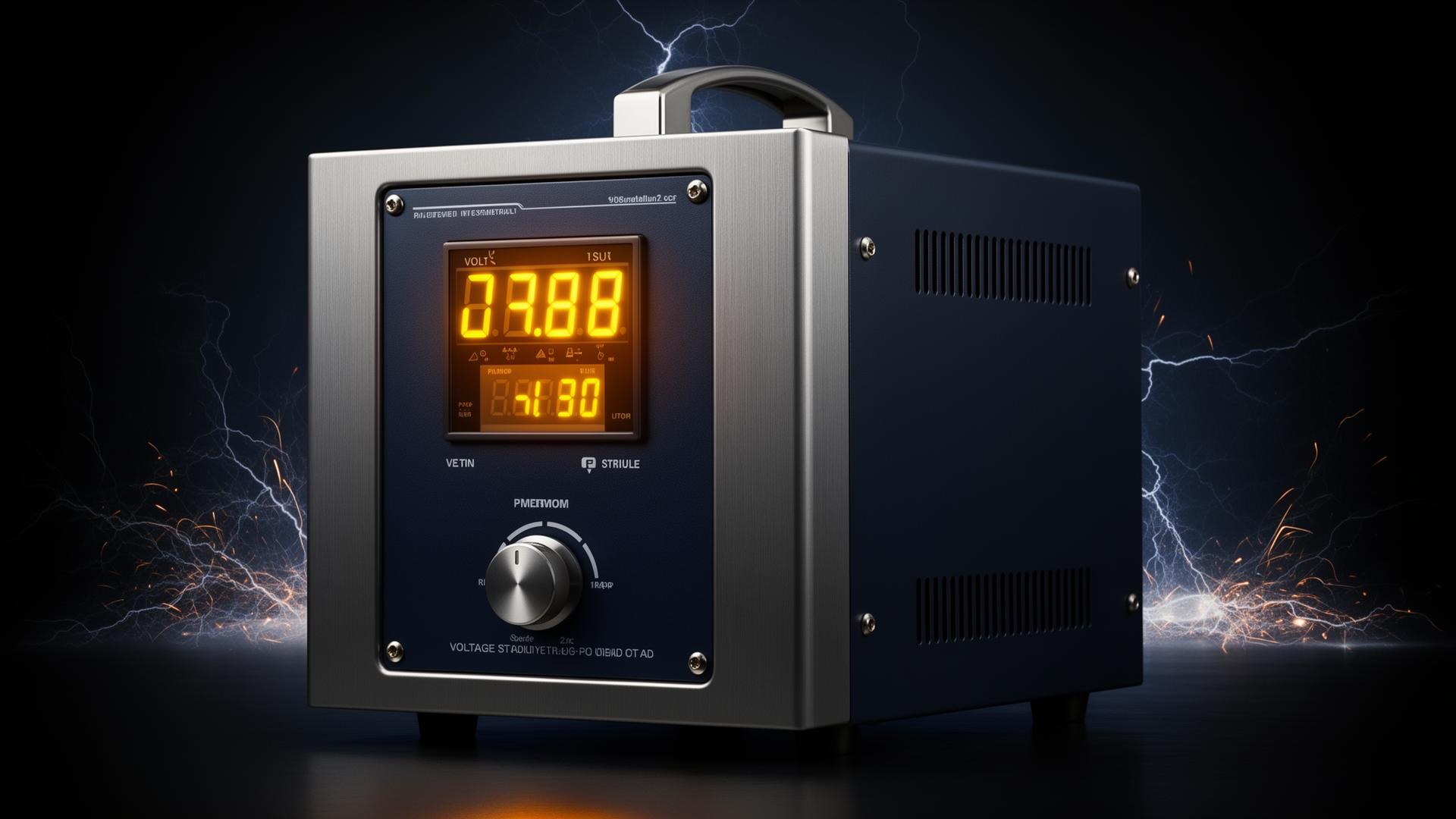
What Happens When Voltage Fluctuates?
Imagine you are watching TV on a hot Surat evening. The AC is running, the refrigerator is humming, and suddenly the lights dim for a second — then come back brighter than before. That flicker you just saw is a voltage fluctuation, and in that split second, your appliances took damage.
Voltage fluctuation means the power supply from the grid is not steady. It goes up (voltage surge) and down (voltage drop). In India, this is extremely common, especially during summer, monsoon, and in areas with old power infrastructure.
Some fluctuations are small and barely noticeable. Others can be severe — a sudden spike of 400V in a home designed for 230V can destroy the PCB of your AC, the compressor of your refrigerator, or the SMPS of your computer within milliseconds.
The worst part? You may not even notice until your appliance stops working weeks later.
The Real Cost of NOT Using a Stabilizer
Here is the honest truth: not using a stabilizer can cost you far more than buying one. Let us look at the numbers.
A good home stabilizer costs between ₹1,500 and ₹5,000. Now compare that with the cost of replacing appliances:
| Appliance | Average Repair Cost | Replacement Cost |
|---|---|---|
| Split AC PCB repair | ₹2,500 – ₹5,000 | ₹35,000 – ₹60,000 |
| Refrigerator compressor | ₹3,000 – ₹6,000 | ₹18,000 – ₹40,000 |
| Washing machine board | ₹1,500 – ₹3,500 | ₹15,000 – ₹35,000 |
| LED TV power supply | ₹800 – ₹2,500 | ₹15,000 – ₹80,000 |
| Desktop computer SMPS | ₹1,000 – ₹3,000 | ₹30,000 – ₹80,000 |
| Water motor rewinding | ₹800 – ₹2,000 | ₹5,000 – ₹15,000 |
The pattern is clear: a single repair can cost more than a good stabilizer. And if the appliance is out of warranty, that cost comes entirely from your pocket.
But the real hidden cost is downtime. If your shop's CCTV system gets damaged by a voltage spike, you lose surveillance for days. If your factory's control panel gets fried, production stops for hours or days. That lost business revenue often exceeds the equipment cost.
Voltage Problems in India: By the Numbers
To understand why stabilizers are not optional in India, look at the ground reality:
• In most Indian cities, voltage fluctuates between 180V and 270V daily. The standard is 230V. • During summer, AC load causes voltage drops as low as 140V in many residential areas. • Power cuts followed by sudden restoration often cause voltage spikes of 350V or more. • In industrial areas of Gujarat (Surat, Ahmedabad, Vapi), three-phase voltage imbalances are common. • Old buildings and apartments often have poor earthing, making voltage issues worse.
A voltage stabilizer constantly monitors the incoming power and adjusts it to a steady 230V output. When the input is low, it boosts it. When the input is high, it cuts it down. When the voltage is dangerously high or low, it disconnects the load to protect your equipment.
Without a stabilizer, your appliances are at the mercy of the grid.
Types of Voltage Stabilizers: Which One Do You Need?
Not all stabilizers are the same. Choosing the right type depends on what you are protecting.
Relay-type stabilizers are the most common and affordable. They use a relay to switch between transformer taps to adjust voltage. They are good for home appliances like ACs, refrigerators, and TVs. Response time is a few milliseconds — fast enough for most home needs. Price range: ₹800 to ₹4,000.
Servo stabilizers use a servo motor to adjust voltage smoothly and precisely. They are much more accurate (within ±1%) and handle wider input voltage ranges. They are ideal for industrial machinery, medical equipment, CNC machines, and whole-building protection. Price range: ₹5,000 to ₹2,00,000+ depending on capacity.
Static stabilizers (also called digital or IGBT-based) use solid-state electronics for instant voltage correction. They are the fastest type, responding in microseconds. Used for sensitive lab equipment, data centers, and high-end medical devices. Price range: ₹10,000 to ₹5,00,000+.
Automatic voltage regulators (AVR) are built into some appliances like inverter ACs and high-end refrigerators. They provide basic protection but cannot handle severe fluctuations. For Indian conditions, an external stabilizer is always recommended even if the appliance has an inbuilt AVR.
Voltage Stabilizer Price Range in India (2026)
Here are the approximate price ranges for different types and capacities of stabilizers available in India. Prices vary by brand, build quality, copper vs aluminum winding, and features.
Home & Small Office Stabilizers
| Capacity | Relay Type | Servo Type | Best For |
|---|---|---|---|
| 0.5 KVA | ₹800 – ₹1,200 | — | Single appliance (TV, fridge) |
| 1 KVA | ₹1,200 – ₹2,000 | — | Desktop + monitor |
| 2 KVA | ₹1,800 – ₹3,000 | — | 1-ton AC, home circuit |
| 3 KVA | ₹2,500 – ₹4,000 | ₹5,000 – ₹8,000 | 1.5-ton AC, small home |
| 5 KVA | ₹4,000 – ₹6,000 | ₹7,000 – ₹12,000 | 2-ton AC, home + appliances |
| 10 KVA | ₹6,000 – ₹10,000 | ₹12,000 – ₹20,000 | Whole home, small shop |
Industrial & Commercial Stabilizers
| Capacity | Relay/Servo | Best For |
|---|---|---|
| 15 KVA | ₹15,000 – ₹25,000 | Small factory section |
| 25 KVA | ₹22,000 – ₹40,000 | Workshop, textile unit |
| 50 KVA | ₹40,000 – ₹70,000 | Medium factory, building |
| 100 KVA | ₹70,000 – ₹1,20,000 | Large factory, apartment |
| 200 KVA+ | ₹1,50,000 – ₹5,00,000+ | Whole factory, industrial plant |
Note: Prices are approximate and subject to change based on copper prices, features (digital display, bypass switch, time delay), and brand.
The Downside of NOT Using a Stabilizer: Real Scenarios
Let us look at real situations where skipping a stabilizer led to major losses.
Scenario 1: The ₹25,000 AC Repair A family in Surat installed a new 1.5-ton split AC without a stabilizer. The AC had an "inbuilt AVR" sticker, so they thought it was safe. During a voltage fluctuation in June, the outdoor unit PCB got damaged. The service center quoted ₹6,500 for the PCB replacement. A month later, the compressor failed — ₹9,500 for a new compressor plus labor. Total damage: ₹16,000+ in just two months. A good stabilizer costs ₹2,500.
Scenario 2: The ₹40,000 Refrigerator Loss A household in Ahmedabad lost an entire refrigerator of food when the compressor failed during a power cut + surge event. The refrigerator itself was beyond economical repair at 8 years old. Replacement cost: ₹28,000. Lost food: ₹5,000. A stabilizer costing ₹1,800 would have prevented it.
Scenario 3: Industrial CNC Controller Damage A small workshop in Vapi had a voltage spike that damaged the CNC controller board. The board replacement cost ₹45,000, and the machine was down for 10 days — losing production worth approximately ₹80,000. A servo stabilizer for their setup would have cost ₹18,000.
Scenario 4: The ₹2,00,000+ Hospital Equipment Damage Some of the worst cases come from medical facilities. Diagnostic equipment, ECG machines, and X-ray units are extremely sensitive. A voltage surge in a diagnostic centre in Surat damaged their X-ray machine's control unit — repair cost ₹65,000, and the machine was out of service for 2 weeks.
The common thread: In every case, the stabilizer would have cost a fraction of the damage.
How to Choose the Right Stabilizer: Step-by-Step
Follow these steps to pick the right stabilizer for your needs:
Step 1: Calculate the total load Add up the wattage of all appliances you want to protect. For ACs, check the nameplate for "Maximum Input Wattage." For motors, use the HP rating (1 HP = 746 watts). Always add a 20-25% safety margin.
Step 2: Convert to KVA Voltage stabilizers are rated in KVA. Divide total watts by 0.8 (power factor) to get KVA. For example, a 2,000 watt load needs at least a 2.5 KVA stabilizer.
Step 3: Check your area's voltage range If voltage in your area drops below 180V or goes above 260V regularly, you need a wide-range stabilizer. Servo stabilizers handle wider ranges better than relay types.
Step 4: Choose relay vs servo Relay-type for home appliances. Servo-type for industrial equipment, whole buildings, or areas with extreme voltage fluctuation.
Step 5: Look for essential safety features • Overload protection • High/low voltage cut-off • Time delay system (protects AC compressor) • Bypass switch (for maintenance) • Digital display (helps monitor voltage in real time)
Step 6: Buy from a reliable manufacturer Buy directly from the manufacturer for better pricing, warranty support, and genuine components. Dealers often mark up prices by 20-40%.
Myths About Voltage Stabilizers
Myth 1: "My appliance already has inbuilt protection, so I don't need a stabilizer." Fact: Inbuilt AVR in appliances provides basic protection against minor fluctuations. It cannot handle severe spikes or sustained low voltage. Indian grid conditions regularly exceed what inbuilt AVRs can handle.
Myth 2: "Stabilizers consume a lot of electricity." Fact: A good quality stabilizer consumes only 1-3% of the connected load as losses. For a 2 KVA home stabilizer, that is about 20-40 watts — negligible on your electricity bill.
Myth 3: "Only expensive appliances need stabilizers." Fact: Every electronic appliance has a printed circuit board (PCB) that can be damaged by voltage fluctuations. Even a ₹5,000 water motor needs protection — a rewinding job costs ₹800-2,000.
Myth 4: "Voltage stabilizers last forever." Fact: Like any electrical equipment, stabilizers have a lifespan. Good quality ones last 8-12 years with proper maintenance. Relay contacts wear out, capacitors age, and transformers can degrade — periodic servicing extends life.
Myth 5: "A bigger stabilizer is always better." Fact: An oversized stabilizer is inefficient and costs more. A correctly sized stabilizer for your specific load gives the best performance and value.
Quick Reference Table
| Appliance Type | Recommended KVA | Approx. Price Range | Protection Level |
|---|---|---|---|
| Refrigerator (single door) | 1 KVA | ₹1,200 – ₹1,800 | Essential |
| Refrigerator (double door) | 2 KVA | ₹1,800 – ₹3,000 | Essential |
| 1 Ton Split AC | 2-3 KVA | ₹2,000 – ₹3,500 | Highly Recommended |
| 1.5 Ton Split AC | 3-4 KVA | ₹2,500 – ₹4,500 | Highly Recommended |
| 2 Ton Split AC | 5 KVA | ₹4,000 – ₹6,000 | Highly Recommended |
| Washing Machine | 1-2 KVA | ₹1,200 – ₹2,500 | Recommended |
| Desktop Computer | 1 KVA | ₹800 – ₹1,500 | Essential |
| CCTV System (8 cameras) | 2 KVA | ₹1,800 – ₹3,000 | Essential |
| Water Motor (1 HP) | 2 KVA | ₹1,500 – ₹2,500 | Recommended |
| Home (all appliances) | 5-10 KVA | ₹6,000 – ₹15,000 | Best Protection |
Frequently Asked Questions
Is a voltage stabilizer necessary for all home appliances?+
Can a voltage stabilizer save electricity?+
What is the difference between a stabilizer and a UPS?+
How long does a voltage stabilizer last?+
Can I use one stabilizer for my entire home?+
What size stabilizer do I need for 1.5 ton AC?+
Does Tapi Stabilizer provide installation support?+
Related Articles
AC Stabilizer Buying Guide: Price, Types & Which to Pick
Compare relay vs servo AC stabilizers, check prices for 1 and 1.5 ton ACs, and learn how to choose the best stabilizer in India.
IndustrialIndustrial Voltage Stabilizer: Price, Benefits & Guide
Guide to industrial voltage stabilizers for factories in India. Compare prices, benefits, and how voltage stability protects your business.
Buying GuideVoltage Stabilizer Price List in India 2026 — Full Guide
Complete voltage stabilizer price list in India for 2026. Compare home, AC, servo, and industrial stabilizer prices. Budget-friendly options from ₹800 to ₹5,00,000+.
Need Help Choosing?
Made in IndiaTalk to the Manufacturer Directly
Get expert advice, honest pricing, and the right stabilizer for your needs — straight from the manufacturer.